Tuesday 14 July
Here's what's happening today:
Conference Sessions (Rooms 1 - 6)
- Opening Keynote (Room 1)
- Tracks: Business, Coding, Design, Discoverability (Rooms 1, 3 & 4)
- Mobile Track (Room 2)
- Games:Edu Track (Room 5 & 6)
- Free Roundtables (Room 6)
Networking
- Meet@Develop Meeting Zone (Expo Gallery 2nd Floor) - Find out more HERE
- 18:00 - 20:00: Develop:Brighton IceBreaker in the Metropole Bar - everyone with a Develop pass welcome!
- 19:30 - 23:30: Poker Tournament in support of GamesAid in the Sandringham Suite at the Hilton Metropole. Details & tickets Full details and tickets HERE
View all unofficial networking events
Wellbeing Hub
- Reset and recharge with practitioner-led & self-guided wellness activities. Book HERE
Lunch
- For Conference Pass holders only (Expo Gallery 2nd Floor)
Please note: No Expo today, the Expo is open on Wednesday and Thursday only.
Downloads
Conference Programme Event MapTodays sessions
9:45am
Powered by Players: Reforjing 4J Studios
From its roots as a trusted development partner to becoming a studio defined by innovation and community-first thinking, 4J Studios has been shaped—at every stage—by players.
In this candid and forward-looking keynote, Joe Garrett and Chris van der Kuyl take the stage to unpack the journey of 4J Studios: from its early history and over fifteen years working on Minecraft, through its bold evolution into a creator of original technology and its new IP, Reforj.
This talk explores how 4J is building Reforj to be a modern game ecosystem—one shaped not behind closed doors, but in partnership with its community. From early experiments through to key update milestones, Joe and Chris will reveal how direct player feedback has actively informed systems, features, and design direction.
Looking ahead, they will share what’s next for Reforj, including a preview of Title Update 8 and the unique fully custom Elements Engine powering it.
Session Takeaway
- The importance of listening to your community and how to harness their feedback.
- Insight into 4J Studio’s story and how the company has evolved over 21 years.
- The choice to commit to a custom engine and the impact of its constant evolution.




Games:Edu Track Intro & Keynote: Apprenticeships & the Tacit Knowledge of Game Development
Following a brief introduction and welcome to the day’s events by track hosts Laurence Oldham and Dr Tom Cole, in this keynote, Jake Habgood explores the role of formal and informal apprenticeship in the games industry. Drawing on experience from his own early career at Gremlin Graphics and 20 years of leading training initiatives across industry and academia, the session examines how much of what defines an effective developer is not easily codified, but instead acquired through observation, collaboration, and participation in real production environments.
The talk focuses on tacit knowledge, the practical understanding of workflows, judgement, and team dynamics that emerges through close interaction with experienced colleagues. It argues that this form of learning is central to game development, where rapid iteration, cross-disciplinary collaboration, and shared problem-solving are essential. The session also considers how changes in working patterns, particularly the shift toward remote working, affect the transmission of this knowledge by reducing opportunities for informal exchange, mentorship, and apprenticeship-style learning.
The keynote reflects on the implications for studios seeking to build capability, maintain cultural cohesion, and support early career development, particularly where traditional learning pathways are disrupted. It outlines considerations for sustaining effective knowledge transfer and team development in modern production contexts, before concluding with a Q&A.
Session Takeaway
- Understand the role of apprenticeship, both formal and informal, in developing games industry skills.
- Recognise the importance of tacit knowledge in production environments.
- Identify the challenges remote working presents for knowledge transfer and team development.
- Consider approaches to sustaining effective learning and cultural cohesion within studios.


11:00am
AI Wants to Play: A Game Designer’s Guide to AI in Every Stage of Development
The latest wave of AI is reshaping game development — but what actually works in practice? This talk is a hands-on tour through the stages where AI can help, from initial prototyping to runtime gameplay, drawn from the speaker's recent work as a Studio Design Director owning the AI roadmap and a Creative Director using AI to prototype and ship games.
We start with AI as a design tool. Using platforms like Lovable, Claude, and Gemini, the speaker prototyped a suite of games in weeks rather than months — rapidly iterating on everything from mechanics to UI. We'll cover how to get the best from these tools when used together, and provide an honest comparison of AI tools that actually matter to game teams. We'll then dig into a structured methodology for AI-assisted development — demonstrated on a live project — that prevents common pitfalls such as hallucination and context drift.
Next, we look at AI in the game itself. A custom card game system — inspired by DeepMind's Agent57 — trains a neural network to master multiple card games using universal strategic features; NPCs with generated personas that affect how they respond to player actions; and a game that misuses AI as a core gameplay mechanic.
We also examine some shipped games that use AI in interesting ways, and the design issues they faced. Every example comes with honest results — what worked, what failed, and what's worth your time. Attendees leave with a practical framework for adopting AI in their own studios.
Session Takeaway
- A practical decision framework for choosing the right AI tool and techniques at every stage of development — from prototyping with Lovable and Claude, to choosing between RL, LLMs, and heuristics for your runtime AI.
- How to use AI to radically accelerate game prototyping — with an honest comparison of tools (Lovable, Claude Desktop, Claude Code, Gemini), real case studies showing what each is best at and how they can work together, and a reliable development framework that is transferable to any tool.
- How a single lightweight AI model can learn to play multiple games — a concrete architecture that's smaller and faster than brute-force approaches, including the evolution through different RL techniques and the practical lessons from training failures.
- Design principles for AIs that players actually enjoy — drawn from shipped games and the speaker's own prototypes with clear guidance on what's ready for production, what's experimental, and what's still hype.

Building New Game Teams Before the Game Is Clear
What makes an early game team worth believing in before the game itself is fully known?
In this session, Marco, Client Programmer and New Game Founder at Supercell, shares reflections from joining Supercell through Spark, the company’s program for forming and validating new game teams, and moving into one of its early new game projects in Helsinki.
The talk will look at the messy, practical reality of early team formation: how small teams build trust quickly, make decisions with limited information, use constraints to create momentum, and learn fast enough to know whether they are moving in the right direction. Rather than focusing on a specific game or presenting a polished “Supercell formula,” the session will explore the conditions, habits, and trade-offs that help early teams work better when almost everything is still uncertain.
Attendees can expect an honest, practical perspective on team formation, creative ownership, feedback, and learning speed in new game development.
Session Takeaway
Attendees will leave with a practical look at how early game teams form, learn, and make decisions; reflections on what helps small teams move through uncertainty; and questions developers and leaders can bring back to their own teams.
The Power of Stopping: Spotting a Sunk Cost Fallacy Before it Sinks your Project
It's no great secret that projects overrun, that humans don't always make good plans and even when they do, they are inherently bad at spotting when plans are crumbling around them.
How do you stop the train when it’s obvious that your project or feature is overrunning? Game developers are often left feeling powerless to stop or course correct in the face of overrun because they don't have the tools to confidently identify what is going wrong. This talk explores the deeper reasons behind project failure and explains the psychological and behavioural reasons why teams miss warning signs. It will look at the folly of a sunk cost fallacy as well as demonstrate how to ignore the instinct to keep digging when things are already going south.
Although external factors can often derail a project, this talk will demonstrate the tools that Producers and the wider development team can utilise to help guide the team in creating achievable goals, pivot in the face of changing priorities but most importantly, highlight when a project is overshooting the mark so you can pull the plug before it's too late.
Session Takeaway
1) Show how to make Scope drift visible: Being clear on goals and priorities.
2) Recognising that Sunk cost is not a reason to continue: How to decide on future value.
3) How to ensure you have a “kill-switch” process: Ensuring you have a culture that can use it.

A Frame’s Life: Frame Timing, Synchronization, and Latency in UE
Every frame in Unreal Engine goes on a long journey before reaching the screen.
In this talk, we’ll walk through that journey from gameplay code through the game thread, render thread, RHI thread, DirectX, the GPU, and finally onto the display. We’ll explore how these stages synchronize, how frames are queued and presented, and how small decisions can add measurable latency.
By the end, you’ll have a clearer picture of frame pacing, vsync, VRR, swap chains, input delay, and Unreal’s game thread synchronization options, so you can make more informed decisions on the tradeoffs between performance and responsiveness.
Session Takeaway
The audience will learn about the many different factors that make up whether a frame makes or misses a vsync.

Developing Tomorrow’s Talent: Studio Strategies and Solutions
This expert panel brings together leaders from a broad range of studios to share how they build and nurture talent in the games industry.
- The panel will draw from their deep and varied experience and approaches, providing insights into the challenges and successes they’ve encountered.
- Attendees will gain a practical understanding of the diverse strategies studios use to develop talent, the real-world obstacles faced, and the benefits of investing in future professionals.
- The panel is especially relevant for studio leaders and educators seeking actionable strategies for talent development.
There will be time allocated for audience questions.
Session Takeaway
- Gain real-world insights into how studios are actively addressing talent pipeline challenges.
- Understand the practical challenges, costs, and successes of different approaches to talent development.
- Learn what studios see as the key benefits and future directions for building and sustaining talent in the games industry.




Develop: FTUE (First Time User Experience) Tuesday
A relaxed and informal roundtable designed to help you get the most out of your time at the conference. A diverse panel of friendly and experienced devs from across the whole industry spectrum want to help anyone who feels shy, awkward, a little out of place, on the outside, or just unable to really squeeze all the goodness out of this amazing show. You'll feel positive, empowered and fully equipped to have an absolutely smashing time, with tips on how to be productive, tools to network, and commitments from volunteers to be your safety net should things get a little too much! Finally, should you feel like it would help, we'll match people up with Show Mentors to ensure however long you're in Brighton, you go back to your studio feeling invigorated and inspired!
Session Takeaway
- Shared experiences that will give you some ideas on best practise plus do's and don'ts for networking at every event.
- Recommendations for talks to attend and delegates to meet, plus practical help to do so!
- Knowledge of safe and quiet spaces to help manage your experience at the show.
- Introductions to helpers who you can approach throughout your visit if you need a friendly face!


12:00pm
Finding the Balance: Big Team Process vs Indie Mindset
This session looks at how teams can build strong production foundations without losing the creative spark that drives great games. Through lessons learned in both small indie teams and larger studio environments, Michael will share insights into different workflows, team structures, and approaches to sustaining both people and creativity.
Session Takeaway
- Practical strategies for balancing sustainable workloads with efficient production pipelines.
- Clear approaches to structuring teams and workflows that support both accountability and creative experimentation.
- Actionable methods for maintaining team well-being while delivering innovative, high-quality games.
Mobile Games: When Approachability Rhymes with Accessibility
This talk explores how mobile games often excel at approachability but often miss accessibility, which excludes disabled players. Discover the meaningful overlap: customizable controls help both casual players and those with motor impairments, clear audio/visual cues serve new players and those with various disabilities from cognitive to visual and hearing. See how you can properly support OS-level accessibility settings like screen readers and text scaling, while also designing accessible mobile gaming experiences through inclusive design and accessibility-aware development in commonly used engines. Learn from expert game accessibility specialists Cari Watterton (Scopely) and Améliane F. Chiasson (Player Research) and make your next mobile game (or patch!) more accessible.
Session Takeaway
- Learn how to make your mobile game reach a wider audience of people who use mobile devices daily for their accessibility needs.
- Know how to leverage and efficiently support iOS and Android's accessibility settings.
- Learn how to cleverly align accessibility efforts with your goals and objectives.
- Get tips on how to prevent accessibility barriers at the design level to avoid needing to do extra work.


5 Easy Steam Store Page Tweaks to Boost Your Visibility
Your Steam page is the most important marketing asset you have, but most devs unintentionally make it harder for the algorithm to help them. In this session, I’ll walk you through five dead-simple tweaks you can make right now to boost your CTR, increase wishlists, and get your game recommended to the right players.
We’ll look at capsule art clarity, the “verbs first” short description rule, choosing screenshots that actually sell your game, tag alignment, and a couple of keyword tricks that helped Modulus hit 100k wishlists.
Attendees will walk away with a clear checklist, real examples from Modulus and other indie titles, and a better understanding of how small, thoughtful changes can dramatically increase your visibility, wishlist velocity, and long-tail discovery on Steam.
Session Takeaway
- How to apply five quick store page improvements that increase click-through rates and wishlist conversion on Steam.
- Useful benchmarks using proven data from Chris Zukowski.
- How to evaluate and iterate on your own Steam page using a simple checklist that any team can implement immediately.

The Evolution of Interactive Storytelling
Storytelling is at the heart of what we do and runs across all crafts and mediums. This session will explore how storytelling and narrative is developing in a creative landscape with increasing overlap between film, games and television.
The panel will discuss their creative approaches, how they get inspiration, how ideas are generated and how they shape narratives across channels.
Session Takeaway
- Why storytelling remains the connective tissue across film, television and games despite differences in format and audience behaviour.
- How audiences increasingly expect to engage with stories across multiple platforms and mediums.
- Why games are now influencing the broader entertainment industry creatively, not just commercially.
- Where ideas originate: character, world, mechanics, emotion or theme.
- How narrative development differs between linear and interactive storytelling.




Opportunities For Talent: Workshopping The Foundations Of A Better Future
How can we evolve the conversation from talent needs into sustainable growth opportunities?
Work alongside education and industry panelists of this and the previous session to raise your own issues and success stories, helping address your challenges and architect the foundations of a more resilient talent ecosystem.
The session begins with high-impact Provocations for Growth from a broad field of experts. Each speaker will provide a brief, five-minute talk on their experiences and expertise.
Following these insights, the floor opens for a Foundations Workshop. Participants will work in mixed groups of educators and industry to capture ideas using Padlet technology. Working through the obstacles, groups will brainstorm potential solutions drawing out and building the foundations for action.
Session Takeaway
- Identify and address shared barriers in the education‑to‑industry talent pipeline.
- Collaborate on practical ideas to support graduate development.
- Learn from cross‑sector perspectives, industry education, and those bridging the gap.
- Contribute to actionable foundations for future talent growth.


Too Many Ideas, One Game: ADHD Survival Guide for Game Dev
Game development is already a difficult, long, messy marathon. Add ADHD traits like novelty chasing, time blindness, and idea overload, and it can feel like you are constantly fighting your own brain.
This light hearted talk is a practical, real world look at how to work with ADHD in game development and turn common pain points into strengths. Instead of trying to force a “normal” workflow, I will share approaches that harness what ADHD can be good at: creative problem solving, momentum bursts, rapid iteration, and high energy finishing pushes.
It is not a medical talk or about motivation hacks. It is an overview of strategies, habits, and production choices that help you ship, stay sane, and use your brain the way it actually works. It's around how I have turned something that could be considered debilitating into a super power to get sh*t done.
Session Takeaway
- A simple way to capture ideas without derailing the main project.
- A method for choosing the next task when focus is inconsistent.
- A repeatable approach for turning hyperfocus into finished work.

2:00pm
Scaling Without Breaking Your Studio
As game studios grow, the biggest risks to performance and long-term value often shift away from the product itself and towards leadership capability, decision-making clarity, and how pressure is handled across the organisation.
This session explores the predictable pressure points that emerge as studios scale, and why many challenges attributed to hiring, process, or delivery are often symptoms of deeper leadership and system strain.
Drawing on experience across multiple growth-stage studios, the talk explores the inflection points where execution risk, attrition, and leadership overload tend to increase. It looks at why leadership capability often lags behind headcount growth, how decision bottlenecks and unclear accountability quietly erode value, and the hidden cost of pushing for growth without strengthening people and leadership systems.
The session also shares practical leadership shifts that support resilience, clarity, and sustainable performance under pressure.
This is a grounded, experience-led session for founders, studio leaders, and investors who want to reduce execution risk, protect long-term value, and support studios to scale responsibly in uncertain conditions.
Session Takeaway
Recognise early leadership and people risks as studios scale
Understand how leadership systems affect delivery and execution risk
Apply practical shifts to support sustainable performance

Scaling Cross-Platform Delivery: From Mobile Bottleneck to Self-Service Platform
Digital products live across mobile, web, desktop — but delivery usually doesn't. One central mobile team becomes a ticket factory for everyone else, web prioritises desktop, and releases turn into cross-team coordination hell. In this talk, Vladimir Pronin shares a production case where a mobile app transformed from single-team bottleneck into a self-service platform enabling parallel delivery from 10+ squads.
Vladimir unpacks the shift from "mobile as channel" to "mobile as platform": defining crisp platform boundaries that enable instead of constrain, guardrails that let squads ship safely without central approval, and shared observability that makes incidents solvable instead of mysterious. He shows how platform contracts replaced ad-hoc tickets, how outcome alignment stopped channel wars (app vs web vs desktop), and how delivery cadence went from monthly heroics to weekly business-as-usual.
Expect practical patterns for your own cross-platform reality: team topologies that scale, decision frameworks that stick, platform metrics that matter, and org design that makes delivery predictable. Perfect for technical leads tired of coordinating releases across silos and wanting platform thinking that actually ships.
Session Takeaway
- Mental model for platform boundaries that scale cross-platform delivery.
- Team topology patterns to escape centralised mobile ownership.
- Decision framework to align mobile/web/desktop around outcomes not channels.

How to Develop and Execute a Marketing Content Strategy Without Losing Your Mind
We've all been there - grand plans for multi-channel marketing campaigns that will spread far and wide, and an eager audience across myriad platforms just ready to like, comment and follow our posts. Then, reality sets in. There's too much to do and too little time to carry out our dream marketing campaigns.
In this session, Najmah will walk through how to design a content strategy that takes into account your limited resources while still keeping up a sustainable and consistent marketing plan.
Session Takeaway
- A step-by-step playbook on marketing content strategy.
- How to make the best of limited marketing resources.
- Creating a focused and impactful marketing plan.

Your Game is Better Than You Think: How to Find and Nurture the Soul of Your Game
Thinking beyond genres and descriptions early in development makes it more likely your game will succeed. You *can* do this without sacrificing creativity and artistry, but it requires a fresh perspective.
Drawing on my experience both signing games for major publishers, and pitching to them as an agent, I’ll be giving you a framework to interrogate your game designs, find their irreducible core and craft truly appealing games.
This goes deeper than picking a genre, a handful of Steam tags and guessing at an elusive “USP”. In today’s crowded marketplace, you can’t just describe what you are making. You can however greatly increase your chances of success by looking at your game through a different lens, and working hard to intrigue and convince your audience.
With a number of examples from both indie and AAA spheres, I’ll be showing the way to making make games that people don’t just play, but ones they cherish and evangelize.
Session Takeaway
Discover how to look beyond genres and descriptions to get at the true core of your game
Learn how to convince people about your game, not just describe it
Get the tools to reach a bigger audience without sacrificing creativity

XDS Ignite - External Development for Developers (Half Day Session)
XDS Ignite is a developer-only event that brings together developers and publishers in a curated program focused on furthering the advancement of external development (or outsourcing), as this becomes a critical component in sustainable game creation. XDS Ignite is a half day session that runs between 1:00pm - 6:00pm at Develop:Brighton.
2:00pm - 3:30pm
XDEV at a Crossroads: What the Best Teams are Doing Differently
In this session, members of the XDS Advisory Committee share what they’re seeing across the industry right now: what’s working, what’s changing, and where teams are getting left behind.
Sam Carlisle (Moderator) (Co-Founder, XDS Spark)
Claude Bordeleau (CRO, Winking and Founder & CEO, Ampera)
Dave Sanderson (Director of External Development, Interleave)
Rikki-Lynn Vitello (Director of External Development, EA Full Circle)
Carl Schmidt (Senior Director of External Development, Zynga)
4:00pm - 5:30pm
Battlefield Tactics for External Development
A look through how Battlefield Studios tackles multi-studio content development under one franchise umbrella. What worked, what didn’t and what’s next.
Ric Miskimmon (External Development Operation Director - Battlefield, EA)
Registered attendees will also receive an invite to an exclusive Monday evening social mixer and pre-XDS Ignite workshop featuring XDS’ engaging TableTopic deep dives.
Advanced registration is required for this developer and published focused event.
The registration for this event is now closed.
Burnout: An Honest Chat About the Causes, Symptoms and Recovery
Burnout is a very common yet often hidden issue in the games industry. Many founders and senior leaders experience burnout multiple times, usually in silence while pretending they're fine. When you're under constant pressure, feel like you can't switch off or aren't able to prioritise your own needs, burnout becomes almost inevitable. But you can avoid it if you catch it early enough and make positive changes.
This roundtable creates a safe space for games leaders to share authentic experiences of burnout, stress and exhaustion. It's a chance for you to let your mask down for a moment and speak honestly without judgement or the need to perform. We will normalise these experiences and help you recognise signs of burnout in yourself and others.
Rather than offering generic advice, the discussion will focus on practical, experience-led insights:
- What burnout actually feels like before it becomes unavoidable
- Why people commonly ignore or rationalise the signals
- What has genuinely helped with recovery and prevention.
You'll learn why you need to look after yourself in order to be a good leader for your team and the hidden cost of “just pushing through”.
My goal is to help you feel less alone in your struggles and leave with tools you can apply immediately in your own life and studio.
Session Takeaway
- How to recognise burnout signals in yourself or your team.
- Practical tips for recovery and prevention.
- Reassurance that burnout is unfortunately common and you're not alone if you're struggling with it.

3:00pm
Interface as Identity: Designing UI That Complements the Brand
UI and branding are often treated like separate jobs. Branding frames the game from the outside and sets expectations. UI is what happens once you’re inside, where those expectations turn into experience.
UI isn’t only about clarity and function. It is a visual language players learn through repetition, and it carries tone, perspective, and intent through structure, typography, spacing, motion, and density. Long before a logo is refined or a trailer is cut, the UI is already shaping how the game feels.
This talk explores how interface decisions influence identity, how branding later reacts to what the UI has already made real, and how to design the two so they support each other instead of pulling apart.
We’ll look at familiar examples where UI choices become part of the game’s voice, and cases where the outside promise and inside experience don’t match. The goal isn’t to make UI look like marketing. It’s to build a shared voice: the same intention expressed clearly in two different contexts.
You’ll leave with a simple framework and checklist you can use early in development, even on small teams.
Session Takeaway
- A simple framework for aligning UI and branding from early development
- How to define a shared anchor and one consistent signal players recognize anywhere
- How to adapt style when direction shifts without rebuilding everything


Level Up In-Game Earnings Without Losing Players
Discover how to boost your game’s revenue without compromising the player experience. Drawing on insights from thousands of games using such solution, we’ll show how mobile, PC, and console publishers can integrate non-intrusive, immersive ads that feel natural in-game, drive meaningful engagement, and increase earnings—all while keeping players happy and engaged.
Session Takeaway
- How to integrate non intrusive immersive ads into mobile PC and console games without disrupting the player experience.
- Best practices for ad placement frequency and design to boost engagement and revenue.
- How to use player analytics and data to optimize monetization while maintaining retention.

Moving from Engineering To Management
This talk will explore the different pathways that an engineer (or IC) can take in order to move into management. It will include personal experiences within management (both as an employee and as a manager) and a thorough dive into management itself, exploring the pathways to management, different types of managers, and how to properly balance opportunities. Additionally, it will discuss in detail the different steps an engineer must take and the responsibilities that come with each of those steps.
Session Takeaway
- The questions to ask and conversations that can be had to define a path into management
- How to balance engineering and management responsibilities
- The different options available within management

How Rethinking Pay and Power Helped Us Build a Resilient Co-Dev Studio
The most common company value is integrity while the second most common is collaboration. But how many truly live by those values when pay structures reward competition and the most important decisions are made behind closed doors? Values alone don’t shape studio culture.
This talk is a case study of what happened when an industry veteran and an outsider founded a co-dev studio where pay is transparent, power is shared and the company culture is built within the studio structure.
Leveraging her background as a Research Scientist, Daph frames this talk as an experiment. She walks you through the original hypothesis, what rethinking pay and power meant, and their observations as the studio grew from 2 to 18 people over two years, contributing to multiple AAA co-dev projects. She will also provide a practical evaluation of these structural decisions, including their difficulties, successes and impact.
This talk is for anyone from any discipline interested in learning about how studio structure can build resilience, improve retention and affect collaboration in a co-dev environment.
Session Takeaway
- An case study of how transparent and aligned pay structures influence collaboration, competition and retention
- An understanding of how studio culture can be shaped by structural decisions, and not just values
- A new perspective on industry norms related to pay, power and resilience

XDS Ignite - External Development for Developers (Half Day Session)
XDS Ignite is a developer-only event that brings together developers and publishers in a curated program focused on furthering the advancement of external development (or outsourcing), as this becomes a critical component in sustainable game creation. XDS Ignite is a half day session that runs between 1:00pm - 6:00pm at Develop:Brighton.
2:00pm - 3:30pm
XDEV at a Crossroads: What the Best Teams are Doing Differently
In this session, members of the XDS Advisory Committee share what they’re seeing across the industry right now: what’s working, what’s changing, and where teams are getting left behind.
Sam Carlisle (Moderator) (Co-Founder, XDS Spark)
Claude Bordeleau (CRO, Winking and Founder & CEO, Ampera)
Dave Sanderson (Director of External Development, Interleave)
Rikki-Lynn Vitello (Director of External Development, EA Full Circle)
Carl Schmidt (Senior Director of External Development, Zynga)
4:00pm - 5:30pm
Battlefield Tactics for External Development
A look through how Battlefield Studios tackles multi-studio content development under one franchise umbrella. What worked, what didn’t and what’s next.
Ric Miskimmon (External Development Operation Director - Battlefield, EA)
Registered attendees will also receive an invite to an exclusive Monday evening social mixer and pre-XDS Ignite workshop featuring XDS’ engaging TableTopic deep dives.
Advanced registration is required for this developer and published focused event.
The registration for this event is now closed.
Raise the Game Roundtable
Join us to talk about how to make the games industry a more equitable, diverse and inclusive place to be. Through this roundtable, we’ll aim to discuss actionable takeaways to make your studio or company a more inclusive place to work for, and share tips on how to do so sustainably. You will also learn what Raise the Game and their partners are up to, and how you can get involved.
Session Takeaway
- How to make your studio a more equitable, diverse and inclusive place.
- Take action sustainably.
- Make long-lasting changes in your studio culture.
- Become a more organisationally mature studio.


4:00pm
Beyond Awareness: Supporting Neurodiverse Teams Without Burning Out Managers
Over the last few years, awareness of neurodiversity and mental health in games has grown significantly. Many studios now genuinely want to do better. The challenge is sustaining that support in a way that works for both employees and the people managing them.
This talk focuses on what happens after awareness, when good intentions meet deadlines, live projects, and already stretched managers. It explores the practical realities of supporting neurodiverse teams in fast paced production environments.
Drawing on real examples from global AAA teams, I will examine what support actually helps neurodivergent employees thrive, where accommodations can unintentionally create friction, and how emotional labour often quietly shifts onto managers without the tools to carry it. We will look at how to move from reactive, individual fixes to team level systems that protect psychological safety without burning people out.
This session is practical, honest, and grounded in lived experience. It is not about perfection or policy heavy solutions, but about building sustainable team norms that make space for difference while still delivering high quality work.
Attendees will leave with a clear framework for supporting neurodiverse teams, protecting manager wellbeing, and embedding inclusion into everyday studio operations.
Session Takeaway
How to support neurodivergent employees in a sustainable way that works in real production environments
How to protect manager wellbeing while fostering psychological safety and inclusion
How to move from individual accommodations to team level systems that scale
What common mistakes to avoid when supporting neurodiverse teams

The State of Mobile Creativity in 2026
Join a panel of industry experts to explore the state of creativity in mobile games in 2026. As the mobile market becomes more saturated and competitive than ever, AI continues to reshape development, and success is increasingly defined by CPI, where does creativity fit? Our panel interrogates the role of creativity in today’s mobile games industry.



How to Make Whatever You Want and Still Get Attention
In absence of any sort of studio backing, funding grants, publishers, or doing anything the industry tells him to do, Stanley Baxton has managed to develop several award-winning narrative games, and went on to be part of BAFTA Breakthrough 2025 with his game LATEX, LEATHER, LIPSTICK, LOVE, LUST. In this talk, he’s going to break down how he did it, making a case for abandoning the “normal” way to develop games, and how the industry is ignoring vital talent at the fringes.
Session Takeaway
- Why we need to look beyond “getting into” the industry as a means to make meaningful games, and how this makes the entire field stronger.
- Why making “hyper-local” game for very specific “audiences” should be pursued by more developers, and can be as culturally impactful as it is artistically fulfilling.
- How someone can start striking out into making “non-commercial” games in “not real” game tools, why they should, and why I believe this needs to become more common advice to newcomers and students.
- Why, despite the fact that I’ve been able to do this, that I am still in several positions of economic privilege, and that we need more systems to support artists on the fringes.

No, Puzzle Games Aren’t Dead, You Just Didn’t Realise They’re Emotional Experiences Too
Games are emotional experiences, this is very clear in genres like first person shooters or adventure games. However, puzzle games are about logic and deduction, and it’s not immediately clear that emotions are even present, let alone important. I will make the case that despite appearances, puzzle games are indeed emotional, and in articulating how different mechanics create different emotions, we can better understand why some puzzle games stick with us longer than others, and what to consider when building our own puzzle games.
Session Takeaway
- Why you should think of your game mechanics and the intended experience together.
- Examples of how the mechanics reinforce a particular experience.
- New appreciation of puzzle games and puzzle mechanics.

XDS Ignite - External Development for Developers (Half Day Session)
XDS Ignite is a developer-only event that brings together developers and publishers in a curated program focused on furthering the advancement of external development (or outsourcing), as this becomes a critical component in sustainable game creation. XDS Ignite is a half day session that runs between 1:00pm - 6:00pm at Develop:Brighton.
2:00pm - 3:30pm
XDEV at a Crossroads: What the Best Teams are Doing Differently
In this session, members of the XDS Advisory Committee share what they’re seeing across the industry right now: what’s working, what’s changing, and where teams are getting left behind.
Sam Carlisle (Moderator) (Co-Founder, XDS Spark)
Claude Bordeleau (CRO, Winking and Founder & CEO, Ampera)
Dave Sanderson (Director of External Development, Interleave)
Rikki-Lynn Vitello (Director of External Development, EA Full Circle)
Carl Schmidt (Senior Director of External Development, Zynga)
4:00pm - 5:30pm
Battlefield Tactics for External Development
A look through how Battlefield Studios tackles multi-studio content development under one franchise umbrella. What worked, what didn’t and what’s next.
Ric Miskimmon (External Development Operation Director - Battlefield, EA)
Registered attendees will also receive an invite to an exclusive Monday evening social mixer and pre-XDS Ignite workshop featuring XDS’ engaging TableTopic deep dives.
Advanced registration is required for this developer and published focused event.
The registration for this event is now closed.
Graduate Journeys: Experiences, Breakthroughs and Insights From Both Sides
This Free Round table gives the opportunity to hear firsthand from those who have made the journey from education to industry and those who build the pathways. It provides an opportunity to participate in an open discussion about those experiences and their lessons.
In this open, organic conversation, the students and the path builders will share the positive impact of studio-led mentorship and dedicated incubation. We’ll explore the gaps they found and how the support structures helped them overcome those challenges.
Whether you're a student looking for your own path or a studio head looking to build a better internal culture, join us for a constructive look at the practical magic that happens when industry pathways and emerging talent meet.
Session Takeaway
- Gain first‑hand knowledge from those that have made the transition from education to industry.
- Learn how studios and programmes support graduates through mentorship and pathways.
- Gain clarity on practical next steps for moving from education into professional practice.






5:00pm
Scheduled Serendipity: Manufacturing Creative Aha Moments
Inspiration is treated like lightning: an unpredictable and uncontrollable moment. In practice, the best studios do not wait for “Aha” moments to happen randomly, they create the conditions for them to occur reliably.
This talk is a pragmatic guide to elevating your work from waiting for inspiration to strike into a reliable creative powerhouse. How to go from being creative to creating a creative environment.
I will cover how artists and scientists alike have tried to explain the sources and process of creative insight, and how you can use those lessons to create an inspiration pipeline you and your team can run on purpose.
We will look at the two engines behind great ideas: taste (your ability to choose what matters) and process (how you generate, clash, and transform inputs into something new).
You will leave with repeatable practices: how to curate inputs beyond the industry echo chamber, how to use constraints to force originality, how to schedule incubation without wasting time, and how to turn the fuzzy feeling of “this is cool” into shippable creative decisions.
The goal is fewer blocked weeks, fewer derivative dead ends, and more deliberate, high-quality creative breakthroughs.
Session Takeaway
- A repeatable method to create conditions for “Aha” moments instead of waiting for them.
- Practical techniques for curating stronger inputs beyond games and trend loops.
- How to use constraints and transformation loops to avoid derivative design.
- How to schedule incubation and mode switching without losing production momentum.
- Tools to convert vague excitement into clear, shippable creative decisions.

Mobile Gaming: The Next Frontier for Accessibility
Playing games on mobile devices is more popular globally than any other platform, yet to date, less is known about how to make these games more accessible for people with physical disabilities. SpecialEffect sees opening up the world of mobile games as the next frontier in its mission to make gaming more accessible for physically disabled players around the world. However, there are many challenges to be navigated in doing so, both in terms of game design and making them compatible to the widest possible range of assistive control devices - including eye-tracking. It is for this reason that we decided to help bridge the gap and create mobile games of our own. We aim to use these as ‘proof of concept’ to share with the wider-industry what we consider to be best practice for this growing audience of potential players. If you’re interested to find out more about what we’ve learned so far, as well as seeing some of our new games demoed before launch, then this is the session for you!
Session Takeaway
We will share key lessons learned from our experience creating SpecialEffect's own mobile games for Android and iOS.
Positive and practical suggestions for things you should incorporate into your own game design to make it easier for people with physical disabilities to play, as well as an overview of the different assistive control devices now available for mobile and tablet. devices.
Vibe Coding: Build an App in 60 Minutes with GenAI
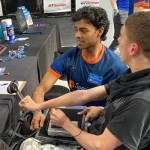
Curious about how AI is changing software development? Join us for a rapid-fire, hands-on workshop where we use "vibe coding"—intuitive, conversational instructions—to build a working application from scratch.
- For Newcomers: Discover how to turn plain English into functional code and build your first app.
- For Experienced Coders: Test the limits of GenAI for rapid prototyping, bypass standard boilerplate, or pair up to mentor a beginner.
Bring your laptop and an idea (or riff off of one of ours!). You will leave with a working project and the fundamental skills to guide AI in software generation.

Steam Events in 2026 (And Why You Want To Be a Part Of Them)
Getting visibility is tough and a constant battle. Steam events offer a vital way to gain large volumes of on-platform traffic both pre and post release. But how do they work? What benefits do they bring? How can you participate or run your own one? Get the lowdown from someone who has hosted six front-page featured events visited by over 10 million Steam users.
Session Takeaway
- Coverage of the different types of Steam events and their landscape in 2026.
- Learn the benefits of Steam events and why they’re an important part of discoverability on the platform.
- Understand what to look out for when participating in a Steam event, along with how to host your own.
XDS Ignite - External Development for Developers (Half Day Session)
XDS Ignite is a developer-only event that brings together developers and publishers in a curated program focused on furthering the advancement of external development (or outsourcing), as this becomes a critical component in sustainable game creation. XDS Ignite is a half day session that runs between 1:00pm - 6:00pm at Develop:Brighton.
2:00pm - 3:30pm
XDEV at a Crossroads: What the Best Teams are Doing Differently
In this session, members of the XDS Advisory Committee share what they’re seeing across the industry right now: what’s working, what’s changing, and where teams are getting left behind.
Sam Carlisle (Moderator) (Co-Founder, XDS Spark)
Claude Bordeleau (CRO, Winking and Founder & CEO, Ampera)
Dave Sanderson (Director of External Development, Interleave)
Rikki-Lynn Vitello (Director of External Development, EA Full Circle)
Carl Schmidt (Senior Director of External Development, Zynga)
4:00pm - 5:30pm
Battlefield Tactics for External Development
A look through how Battlefield Studios tackles multi-studio content development under one franchise umbrella. What worked, what didn’t and what’s next.
Ric Miskimmon (External Development Operation Director - Battlefield, EA)
Registered attendees will also receive an invite to an exclusive Monday evening social mixer and pre-XDS Ignite workshop featuring XDS’ engaging TableTopic deep dives.
Advanced registration is required for this developer and published focused event.
The registration for this event is now closed.
Fixing The Talent Crisis: Moving From Conversation To Action
This Roundtable is focused on the learnings from today’s Games Edu track. We will be consolidating and sharing our thoughts with each other, giving plenty of time for networking to build the necessary bridges and move the discussion into practice.
We will cover the key outcomes from the earlier sessions in the track. Giving a chance for educators, studio leads, and practitioners to share their own observations and challenges, looking for the common ground: where are the successes happening, and where do the challenges remain?
Moving on to networking and further discussion with the view to building the connections that will create lasting links to maintain the momentum and turn conversation into action.
Session Takeaway
- Consolidate key themes and learning from the Games Edu track.
- Share challenges and successes in developing early‑career talent.
- Build new connections across industry, education, and bridging organisations.
* Please note, the schedule may be subject to change.
Tuesday 14 July Official Events
9:00 - 5:00pm: The Wellbeing Hub: Reset and recharge with practitioner-led & self-guided wellness activities.
6:00pm - 8:00pm: Develop:Brighton IceBreaker: Metropole Bar, everyone with a Develop pass welcome!
7:30pm - 11:30pm: GamesAid Poker Tournament.