Click a track to filter sessions











Mobile
Tuesday 14th July
Building New Game Teams Before the Game Is Clear
What makes an early game team worth believing in before the game itself is fully known?
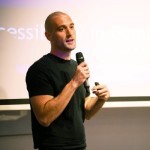
In this session, Marco, Client Programmer and New Game Founder at Supercell, shares reflections from joining Supercell through Spark, the company’s program for forming and validating new game teams, and moving into one of its early new game projects in Helsinki.
The talk will look at the messy, practical reality of early team formation: how small teams build trust quickly, make decisions with limited information, use constraints to create momentum, and learn fast enough to know whether they are moving in the right direction. Rather than focusing on a specific game or presenting a polished “Supercell formula,” the session will explore the conditions, habits, and trade-offs that help early teams work better when almost everything is still uncertain.
Attendees can expect an honest, practical perspective on team formation, creative ownership, feedback, and learning speed in new game development.
Session Takeaway
Attendees will leave with a practical look at how early game teams form, learn, and make decisions; reflections on what helps small teams move through uncertainty; and questions developers and leaders can bring back to their own teams.


Mobile Games: When Approachability Rhymes with Accessibility
This talk explores how mobile games often excel at approachability but often miss accessibility, which excludes disabled players. Discover the meaningful overlap: customizable controls help both casual players and those with motor impairments, clear audio/visual cues serve new players and those with various disabilities from cognitive to visual and hearing. See how you can properly support OS-level accessibility settings like screen readers and text scaling, while also designing accessible mobile gaming experiences through inclusive design and accessibility-aware development in commonly used engines. Learn from expert game accessibility specialists Cari Watterton (Scopely) and Améliane F. Chiasson (Player Research) and make your next mobile game (or patch!) more accessible.
Session Takeaway
- Learn how to make your mobile game reach a wider audience of people who use mobile devices daily for their accessibility needs.
- Know how to leverage and efficiently support iOS and Android's accessibility settings.
- Learn how to cleverly align accessibility efforts with your goals and objectives.
- Get tips on how to prevent accessibility barriers at the design level to avoid needing to do extra work.


Scaling Cross-Platform Delivery: From Mobile Bottleneck to Self-Service Platform
Digital products live across mobile, web, desktop — but delivery usually doesn't. One central mobile team becomes a ticket factory for everyone else, web prioritises desktop, and releases turn into cross-team coordination hell. In this talk, Vladimir Pronin shares a production case where a mobile app transformed from single-team bottleneck into a self-service platform enabling parallel delivery from 10+ squads.
Vladimir unpacks the shift from "mobile as channel" to "mobile as platform": defining crisp platform boundaries that enable instead of constrain, guardrails that let squads ship safely without central approval, and shared observability that makes incidents solvable instead of mysterious. He shows how platform contracts replaced ad-hoc tickets, how outcome alignment stopped channel wars (app vs web vs desktop), and how delivery cadence went from monthly heroics to weekly business-as-usual.
Expect practical patterns for your own cross-platform reality: team topologies that scale, decision frameworks that stick, platform metrics that matter, and org design that makes delivery predictable. Perfect for technical leads tired of coordinating releases across silos and wanting platform thinking that actually ships.
Session Takeaway
- Mental model for platform boundaries that scale cross-platform delivery.
- Team topology patterns to escape centralised mobile ownership.
- Decision framework to align mobile/web/desktop around outcomes not channels.

Level Up In-Game Earnings Without Losing Players
Discover how to boost your game’s revenue without compromising the player experience. Drawing on insights from thousands of games using such solution, we’ll show how mobile, PC, and console publishers can integrate non-intrusive, immersive ads that feel natural in-game, drive meaningful engagement, and increase earnings—all while keeping players happy and engaged.
Session Takeaway
- How to integrate non intrusive immersive ads into mobile PC and console games without disrupting the player experience.
- Best practices for ad placement frequency and design to boost engagement and revenue.
- How to use player analytics and data to optimize monetization while maintaining retention.

The State of Mobile Creativity in 2026
Join a panel of industry experts to explore the state of creativity in mobile games in 2026. As the mobile market becomes more saturated and competitive than ever, AI continues to reshape development, and success is increasingly defined by CPI, where does creativity fit? Our panel interrogates the role of creativity in today’s mobile games industry.




Mobile Gaming: The Next Frontier for Accessibility
Playing games on mobile devices is more popular globally than any other platform, yet to date, less is known about how to make these games more accessible for people with physical disabilities. SpecialEffect sees opening up the world of mobile games as the next frontier in its mission to make gaming more accessible for physically disabled players around the world. However, there are many challenges to be navigated in doing so, both in terms of game design and making them compatible to the widest possible range of assistive control devices - including eye-tracking. It is for this reason that we decided to help bridge the gap and create mobile games of our own. We aim to use these as ‘proof of concept’ to share with the wider-industry what we consider to be best practice for this growing audience of potential players. If you’re interested to find out more about what we’ve learned so far, as well as seeing some of our new games demoed before launch, then this is the session for you!
Session Takeaway
We will share key lessons learned from our experience creating SpecialEffect's own mobile games for Android and iOS.
Positive and practical suggestions for things you should incorporate into your own game design to make it easier for people with physical disabilities to play, as well as an overview of the different assistive control devices now available for mobile and tablet. devices.